
Canoe Lake at the Joe Lake Portage, Algonquin Provincial Park. Photo: Ryan Hodnett / Wikimedia Commons (CC BY-SA 4.0)
Overview of the interior system
Algonquin Provincial Park covers roughly 7,600 square kilometres in the Haliburton Highlands of central Ontario. The park's interior — reached by canoe and foot — contains over 1,500 kilometres of marked canoe routes connecting more than 1,200 lakes and rivers. The majority of interior access points sit along Highway 60, which bisects the park's southern portion.
Ontario Parks manages designated interior campsites throughout the route system. Each site accommodates one party and includes a fire grate and box latrine. Campsite locations are shown on official park maps, which are available at all entry points and through the Ontario Parks reservation system.
Permit Requirements
- Interior camping permits are required for all overnight trips.
- Reservations open in January for the full season through ontarioparks.com.
- A vehicle day-use permit is required to access any park entry point, even for day paddling.
- Each canoe party is limited to nine people per site.
- Fires are permitted only at designated fire grates; check seasonal fire bans before departure.
Entry points and access
Algonquin's Highway 60 corridor contains the park's most developed entry points. Access Point 5 (Canoe Lake) is the busiest, situated near the Portage Store, which rents canoes and equipment. Access Point 1 (Sand Lake Gate) and Access Point 3 (Dwight Bay) offer quieter entries into the western interior.
Eastern access points along the Opeongo Road — particularly Access Point 11 (Lake Opeongo) — open routes into the less-travelled eastern interior. Lake Opeongo is Algonquin's largest lake at approximately 5,900 hectares, and wind conditions on open water can halt paddling for extended periods. Paddlers crossing Opeongo should carry radios or satellite communicators.
Portage logistics
Portage lengths in Algonquin range from under 100 metres to just over 5 kilometres. The longest single portage commonly encountered on recreational routes is the Dickson-Burntroot portage at approximately 4.5 kilometres. Most interior loop routes include portages averaging 500–1,000 metres.
Standard practice is to double-portage when carrying significant gear weight. This means carrying a load partway, returning for the canoe (or vice versa), then completing the carry — effectively walking each portage three times. Route planning should account for portage time at roughly 30 minutes per kilometre when double-portaging with a loaded canoe and gear.
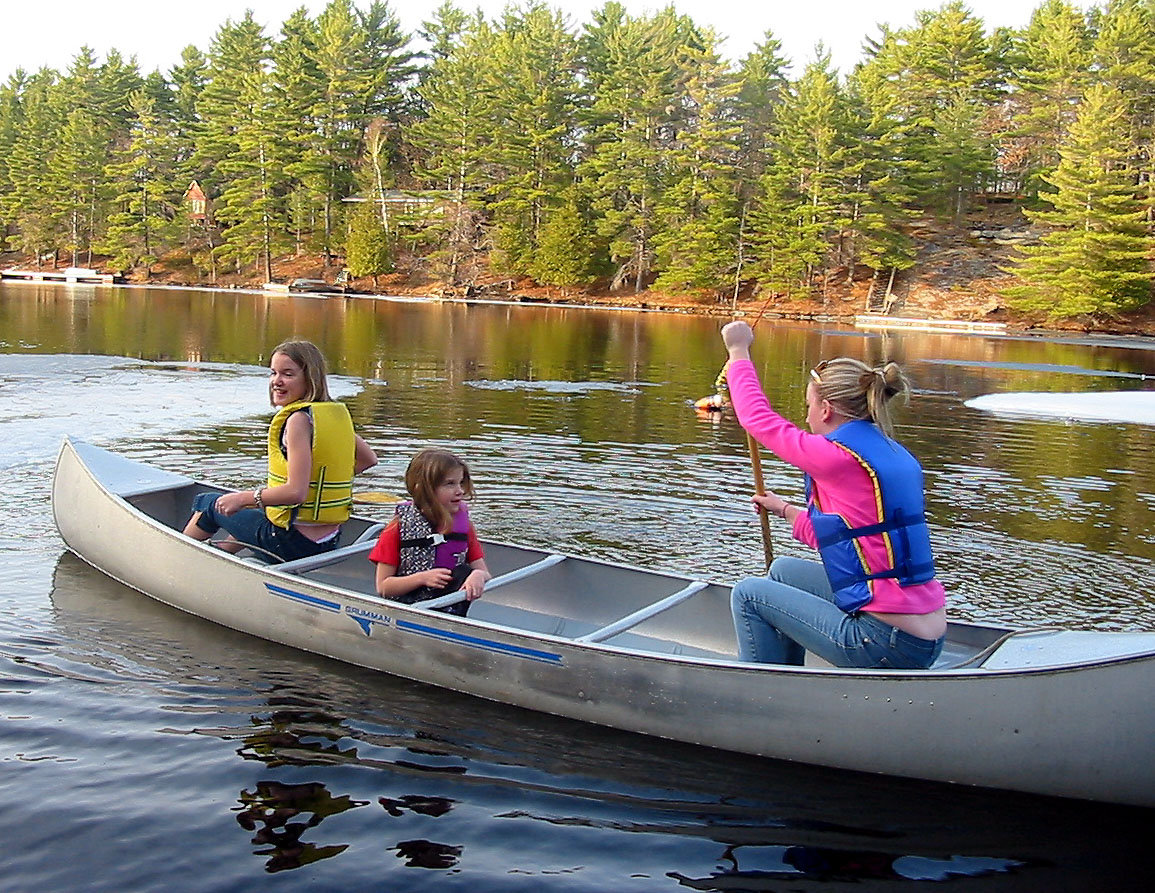
Canoeing on a lake in the Muskoka region of Ontario. Photo: Mathew Ingram / Wikimedia Commons (CC BY 2.0)
Seasonal conditions
The interior paddling season in Algonquin typically runs from mid-May through mid-October, though access point opening dates vary. Spring runoff creates higher water levels on rivers and may increase current speed on connecting rivers between lakes.
Spring (mid-May to June)
Water levels are at their highest following snowmelt. River sections within loop routes move faster, and some shallow portage trails may still hold standing water. Blackfly activity peaks in late May and early June — head nets are considered standard equipment during this period.
Summer (July to August)
Water levels drop and river sections become more manageable for less experienced paddlers. Wind on large lakes such as Opeongo, Canoe, and Tea Lake is the primary hazard during this period. Afternoons tend to produce stronger and less predictable winds across open water.
Fall (September to mid-October)
Water temperatures drop significantly after mid-September. Paddlers should dress for immersion in water temperatures that may fall below 15°C. Reservations are easier to obtain in September, and deciduous foliage provides strong visual context for navigation.
Common multi-day loops
Several route loops are well-documented in the Ontario Parks official route guides. The Rain Lake loop (access via Access Point 1) is a 4–5 day circuit through western Algonquin. The Tim River route offers continuous river travel connecting several lakes. The Opeongo–Hailstorm corridor accesses some of the park's most remote interior lakes via extended portage chains.
Paddling Canada's online route database at paddlingcanada.com maintains community-sourced trip reports for Algonquin and other Ontario routes, including current portage trail conditions and campsite notes submitted by recent visitors.
Wildlife and bear protocols
Algonquin supports a resident black bear population. Ontario Parks requires all food, garbage, and scented items to be stored in a bear hang or park-approved container, suspended at least 4 metres off the ground and 1 metre from any vertical surface. This applies to all interior camping nights regardless of wind or rain conditions.
Moose are commonly seen along marshy lake edges, particularly in early morning. Loons are present on most interior lakes throughout the summer season. Wolves are present but rarely encountered. Park staff at entry points can advise on any current wildlife concerns before departure.